
Finding a Reliable Chimney Sweep Near Me Tappan: 2026 Guide for Valley Cottage Residents
Most chimney companies want you to believe that touching your fireplace without a certified technician standing next to you is basically reckless. That’s not true, and we’re not going to pretend it is. There are things a capable homeowner in Valley Cottage can absolutely handle on their own. There are also things that, done wrong, can put your family at real risk and we’ll be straight with you about exactly where that line sits when you’re searching for a chimney sweep near me Tappan.
We’ve been servicing chimneys across Rockland County long enough to know that a Valley Cottage homeowner who does a little sensible maintenance is far better off than one who ignores the fireplace entirely. So let’s be honest about what falls into each category.
A Valley Cottage Homeowner’s Wake-Up Call
Last February, a homeowner on Lake Road in Valley Cottage called us after noticing a faint smoky smell coming from the living room even when the fireplace wasn’t in use. She’d been burning two or three fires a week through December and January common in homes with older woodstoves along that stretch. She’d also been doing some of her own maintenance: sweeping ash, keeping the damper clear, and making sure the firebox stayed clean. All of that was sensible. What she hadn’t done was have anyone look inside the flue itself since she moved in three years prior.
When our technicians ran a camera through the liner, we found a significant glaze of third-degree creosote on the upper flue tiles and a hairline crack in two tile sections near the smoke chamber. The crack was letting combustion gases seep into the wall cavity which explained the smell. The creosote buildup put her one hot fire away from a serious chimney fire. She’d done the right things at the hearth level. The problem was eight feet up, completely invisible without the right equipment.
Her story is exactly why the DIY-versus-professional question matters so much.
What a Homeowner Can Safely Handle
We mean this: there is real, legitimate maintenance that doesn’t require calling anyone.
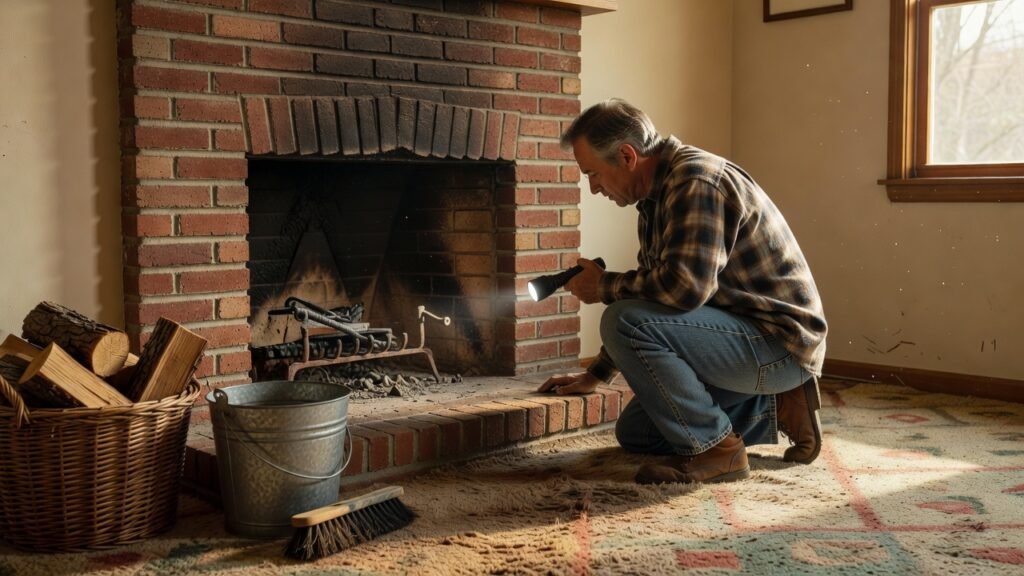
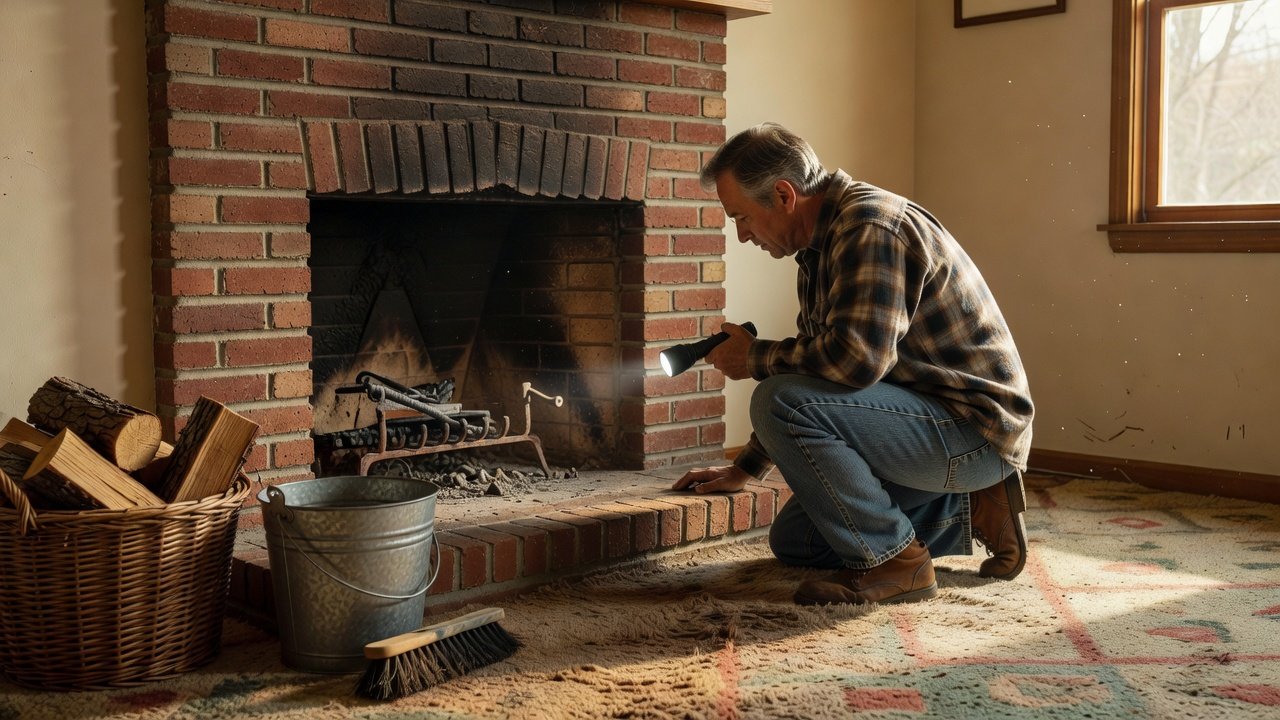
Ash removal. Once the firebox has cooled for at least 24 hours, clearing ash with a metal ash bucket and a stiff brush is straightforward. Keep an inch of ash on the floor of the firebox if you burn wood regularly it actually helps insulate the next fire.
Damper checks. Open and close it by hand. It should move freely and seal reasonably well when closed. If it rattles or feels stuck, note it but operating it isn’t complicated.
Firebox visual inspection. With a flashlight, look at the firebox walls for obvious loose bricks or crumbling mortar joints at the lower level. Surface-level spalling on older brick is normal in Valley Cottage homes that were built in the 1960s and 70s. If a joint is soft enough to crumble when you press it, that’s worth flagging to a pro, but looking costs you nothing.
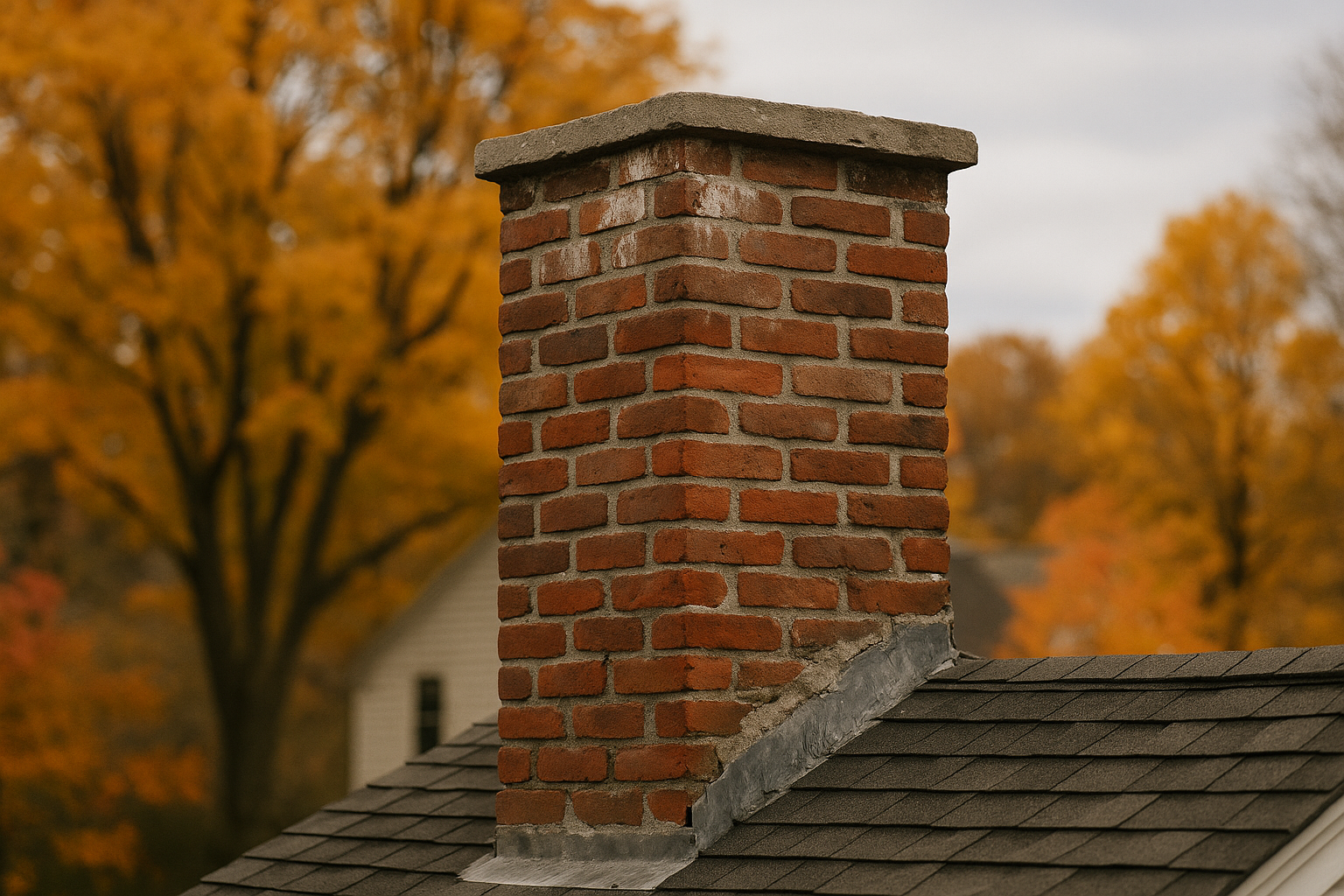
Cap and crown check from the ground. Binoculars work fine. Look for a missing chimney cap, visible gaps around the crown, or obvious missing mortar at the very top. You don’t need to climb anything to do a useful ground-level assessment.
Smoke shelf cleaning. If you’re comfortable reaching through the damper opening with a brush and a vacuum, the smoke shelf behind the damper plate collects a surprising amount of debris. Clearing it annually is reasonable and won’t void anything or violate any code.
Where DIY Stops and a Pro Starts and Why
This is where we’ll be direct. The reasons to call a professional aren’t about protecting our business. They’re about tools you don’t own, hazards you can’t see, and code requirements that affect your homeowner’s insurance.
Flue cleaning above the firebox. The creosote that builds up in the upper flue, smoke chamber, and liner sections isn’t surface dust. According to the Chimney Safety Institute of America (CSIA), chimneys should be inspected at least once a year and cleaned whenever significant deposits are found typically after every cord of wood burned. Removing that buildup properly requires rotary brushes, HEPA-rated vacuums capable of handling fine particulate, and chemical treatments for glazed creosote. Without the right vacuum system, you will coat your living room in black soot and potentially aerosolize fine carcinogenic particles.
Liner inspection and repair. The crack we found in our Valley Cottage customer’s flue tiles is a perfect example of something completely invisible from the firebox opening. The National Fire Protection Association (NFPA) Standard 211 requires annual inspections of chimneys, fireplaces, and venting systems to ensure they are structurally sound and free from deposits. Meeting that standard requires a camera system a piece of equipment that costs several thousand dollars and takes training to interpret correctly. If you’re buying or selling a home in Orangeburg or Piermont, a Level 2 inspection with camera documentation is typically required by the lender. You can’t approximate that with a flashlight.
Masonry repointing above the roofline. Working at height on a pitched roof with masonry tools is a genuine safety risk. Beyond the physical danger, using the wrong mortar mix a very common DIY error can actually accelerate deterioration because chimney mortar has specific heat-resistance requirements that standard hardware-store mortar doesn’t meet. Our masonry repair and repointing service uses the correct formulations for Rockland County’s freeze-thaw conditions.
Chimney liner installation or relining. If your liner is cracked, missing, or undersized for the appliance you’re running, that’s not a DIY correction. Our liner installation service involves precise sizing, code compliance, and often working from both the top and bottom of the flue simultaneously. Done wrong, a poorly fitted liner is worse than no liner at all.
Third-degree creosote. The Chimney Safety Institute of America notes that third-degree creosote that hard, glazed tar is extremely difficult to remove and significantly increases the risk of a chimney fire that can burn at temperatures exceeding 2,000°F. No brush kit from a home improvement store touches it. Chemical treatments require professional application and a follow-up sweep.
The Real Cost of Getting It Wrong
A chimney fire in a connected row of older homes like you’ll find in parts of Pearl River or Nanuet can spread fast. Beyond the immediate danger, a chimney fire or carbon monoxide event caused by a damaged liner can complicate your homeowner’s insurance claim significantly. The Insurance Information Institute advises homeowners to check their policy carefully, as chimney repairs due to sudden accidental damage are often covered, while deterioration from neglect typically is not. Attempting a repair yourself and doing it incorrectly can shift a covered loss into an excluded one.
The U.S. Fire Administration reports that heating fires account for approximately 25% of all reported home fires, with dirty chimneys being one of the leading contributing factors. That figure covers the full range from minor flue fires that go unnoticed to house fires that don’t. The common thread is deferred maintenance and missed inspections, not homeowners who swept their own ash bins.
What a Professional Visit Actually Covers
When Valley Cottage homeowners contact us for a chimney sweep near me Tappan search, here’s what the visit includes: a Level 1 visual inspection of accessible components, a thorough sweep of the flue and smoke chamber, a check of the damper and firebox, and a written report of anything that needs attention. If a camera inspection is warranted which we’ll tell you honestly rather than upsell automatically that’s our Level 2 chimney inspection service. According to HomeAdvisor, the average cost of a professional chimney sweep and inspection in the northeastern United States ranges from $150 to $350, with repairs adding $200 to $1,000 or more depending on scope. Those are realistic numbers for Rockland County in 2026.
Homes in Valley Cottage, Blauvelt, Congers, and up into West Nyack tend to have older clay tile liners that took a beating through the 2025-2026 winter’s hard freeze-thaw cycles. If your chimney hasn’t been looked at in the last two seasons, now is a reasonable time.
Schedule a Sweep Before the Next Burning Season
If you’re in Valley Cottage or anywhere in Rockland County and you’ve been Googling for a chimney sweep near me Tappan, we’d rather give you an honest assessment than a sales pitch. Use our website contact form to request a free estimate we’ll tell you exactly what we see and what, if anything, actually needs to be done. No pressure, no invented problems.
Frequently Asked Questions
How often should I have my chimney swept if I burn wood regularly in Valley Cottage?
The CSIA recommends a sweep and inspection at least once a year, and more often if you’re burning more than a cord of wood per season. Homes in Valley Cottage that run a woodstove as a primary heat source through a full Rockland County winter often benefit from a mid-season check as well.
Can I use a chimney cleaning kit from a hardware store instead of hiring a professional?
For light soot deposits in an accessible flue, a rod-and-brush kit can knock loose debris into the firebox as long as you seal the firebox opening completely and have a proper ash vacuum ready. What it cannot do is remove glazed creosote, inspect the liner for cracks, or clean the smoke chamber properly. It’s a partial tool at best.
What is a Level 2 chimney inspection and do I need one?
A Level 2 inspection includes a camera scan of the full flue interior. NFPA 211 requires it when there’s been a change in the fuel type, a new appliance connection, or a known event like a chimney fire or severe storm. It’s also standard for real estate transactions. If you’re buying a home in Congers or Piermont, insist on one before closing.
Is creosote dangerous even if I don’t see flames in my chimney?
Yes. Third-degree glazed creosote can ignite at temperatures your firebox regularly reaches, and a chimney fire can burn for minutes without you knowing it sometimes long enough to crack the liner and compromise surrounding framing. You may not see flames, but the damage is real.
Does homeowner’s insurance cover chimney repairs?
It depends on the cause. Sudden storm damage to a chimney cap or crown is often covered. Deterioration from years of skipped maintenance or a chimney fire caused by creosote buildup is typically excluded. The Insurance Information Institute recommends reading your policy carefully and documenting annual inspection records.
How do I find a trustworthy chimney sweep near me in Tappan or Valley Cottage?
Look for technicians with CSIA certification, check that they carry liability insurance, and ask for a written inspection report after the visit. A company that tells you nothing is wrong when something clearly is or invents problems when nothing is wrong is equally problematic. Local reputation in a community like Valley Cottage travels fast, and honest assessments build it.
Related from Tappan Chimney Sweep: Chimney Inspection in Tappan, NY · The Smart Way to Choose a Chimney Sweep Tappan NY Homeowners Can Actua