

Essential Warning Signs You Need a Chimney Sweep Sparkill NY Homeowners and Orangeburg Neighbors Shouldn’t Ignore: 2026 Guide for Rockland County Residents
Late autumn in Rockland County has a way of sneaking up on you. One week you’re raking leaves in the backyard, and the next you’re stacking wood and lighting the first fire of the season often before anyone has thought about what’s sitting inside that flue. We see the results of that every winter: homeowners in Sparkill, Orangeburg, and across the county calling us after something goes wrong, when a call in October would have caught it first. Knowing the warning signs that you need a chimney sweep Sparkill NY residents can watch for is genuinely useful it’s the difference between a routine cleaning and an emergency repair bill.
The following signs are things you can actually observe yourself. Some of them mean “schedule something soon.” Others mean stop using the fireplace and call a professional today.
A Real Situation from Down the Road in Orangeburg
Last January, a homeowner in Orangeburg called us after noticing a sharp, tar-like smell filling their living room every time they used their fireplace. They had burned wood through the previous two winters without a single inspection and assumed everything was fine because the fire “drew well.” When our technicians arrived, we found a heavy third-degree creosote buildup coating the inside of the flue liner the kind that looks almost glazed and reflects light. The Chimney Safety Institute of America notes that third-degree creosote is extremely difficult to remove and significantly increases the risk of a chimney fire that can burn at temperatures exceeding 2,000°F. The Orangeburg homeowner’s fireplace was weeks away from a serious incident. A cleaning and a level 2 inspection got them back to safe use within a day, but it was a closer call than it needed to be.
That scenario isn’t unusual around here. Older homes in Orangeburg, Sparkill, and Palisades tend to have original masonry chimneys that have never been relined and freeze-thaw cycles through Hudson Valley winters do real work on mortar joints and clay tile liners year after year.
Warning Signs You Can See, Hear, or Smell
1. A strong, oily, or tar-like smell — especially in summer
This is the smell of creosote, and it’s often most obvious on humid days when you aren’t even using the fireplace. If the odor is coming down into the room, you have a deposit problem that needs professional attention now, not at the end of the season.
2. Smoke backing up into the room when you light a fire
A properly functioning chimney draws smoke up and out. If you’re getting smoke in the room, the flue may be blocked — by creosote buildup, a bird nest, or debris. This is a “stop using the fireplace immediately” situation. Carbon monoxide and smoke particulates are a health risk you shouldn’t manage by opening a window.
3. Black, oily staining on the firebox walls or damper
A thin layer of grey ash is normal. Heavy black staining, especially anything that looks wet or tacky, is stage-two creosote migrating down the flue. Call for a chimney sweep. This is not something to monitor over another season.
4. Visible white streaking on the outside of the chimney
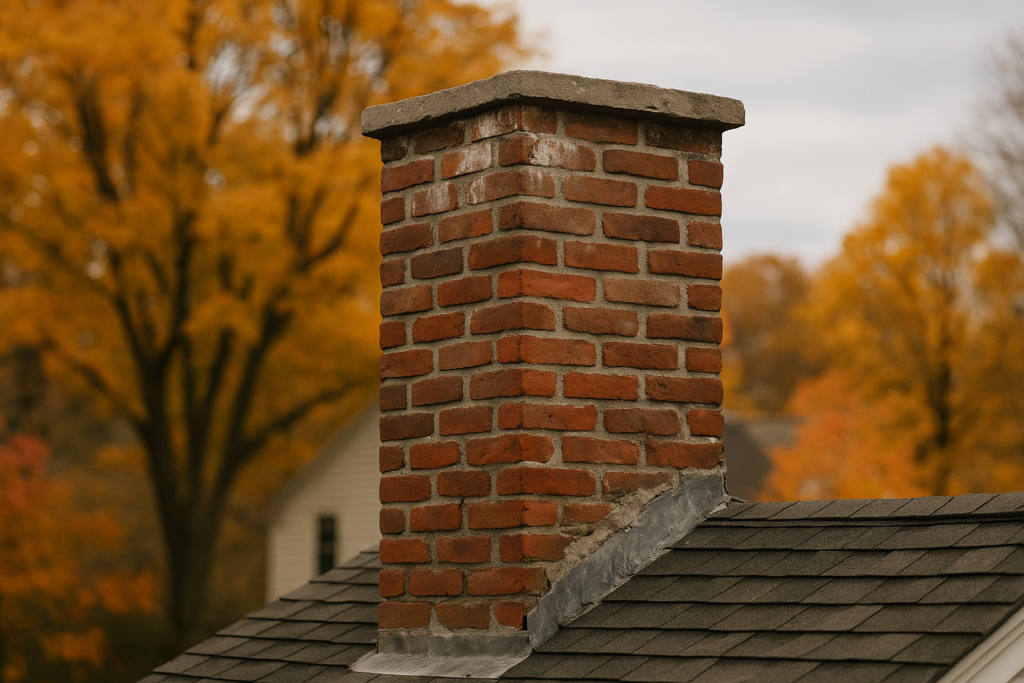
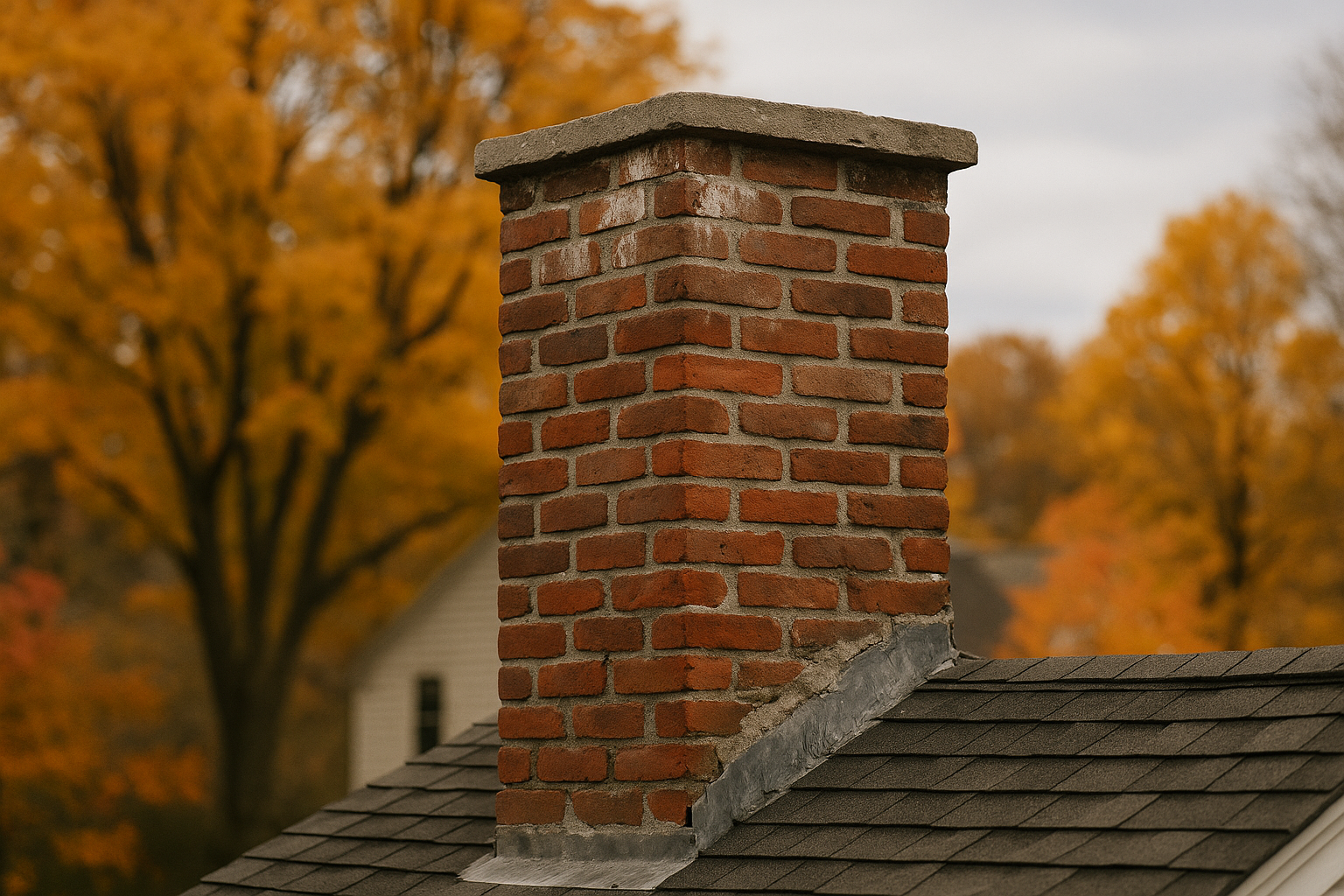
That white staining is called efflorescence mineral salts being pushed out through the masonry by water. It means moisture is getting in. On older Sparkill and Pearl River homes with unrelined chimneys, this typically signals deteriorating mortar joints or a cracked crown, and it gets worse through every freeze-thaw cycle. Left alone, it leads to spalling brick and eventually structural damage. Keep an eye on it but get a masonry assessment booked before next winter.
5. You can hear animals, dripping, or a rushing sound inside the flue
Birds nesting in chimneys is common across Rockland County, particularly in Nyack and Valley Cottage where there’s a lot of mature tree canopy nearby. Chimney swifts are federally protected and cannot be removed while nesting, but their nests left behind are a blockage and fire hazard. A rushing or roaring sound during a fire can indicate a chimney fire is already in progress that is an emergency, get everyone out and call 911 first.
6. The damper is hard to open, stuck, or visibly corroded
A damper that won’t open fully restricts draw and forces byproducts back into the living space. A damper that won’t close lets cold air pour in all winter and small animals in year-round. Either way, this is a repair that needs handling before the fireplace gets regular use.
7. You haven’t had an inspection in over a year or ever
The National Fire Protection Association Standard 211 requires annual inspections of chimneys, fireplaces, and venting systems to ensure they are structurally sound and free from deposits. That’s not a guideline it’s the standard. If you bought a home in Blauvelt or Congers and you don’t know when the chimney was last inspected, assume it wasn’t and book one. Our chimney inspection service covers both level 1 and level 2 assessments depending on your situation.
8. Shaling tiles or small chunks of clay inside the firebox
Look in the firebox after the fireplace has been cold for a day. If you see small grey-white flakes or pieces of clay tile, your liner is deteriorating from the inside. A damaged liner is a structural safety issue gases and heat can now move through cracks into the surrounding framing of the house. This one is a “call a pro now” situation without question. Depending on the liner condition, you may need a full relining.
The Most Common Mistake We See
Homeowners wait. That’s the single most common pattern we see from Sparkill to South Nyack. They notice one of the signs above, decide it probably isn’t serious, and use the fireplace through another winter. By spring, what would have been a $200–$350 cleaning has become a repair job that can run well into four figures new liner sections, repointing, crown replacement, or all three. According to the U.S. Fire Administration, heating fires account for approximately 25% of all reported home fires, with dirty chimneys being one of the leading contributing factors. That statistic exists because waiting is the norm, not the exception.
A routine chimney sweep from our team is straightforward and affordable. The problems that follow from skipping it are neither.
Call a Pro Now vs. Keep an Eye on It
Call now: smoke in the room, tar smell, shaling tiles, sounds during a fire, black oily deposits, stuck damper, more than 12 months since last inspection.
Monitor but book soon: light efflorescence with no crumbling mortar, minor draft issues only in strong wind, a single season of heavier-than-usual wood burning with no other symptoms.
If you’re not sure which category you’re in, call us anyway. We’d rather tell you everything looks fine than have you wait on something that needed attention last October.
Get a Free Estimate from Tappan Chimney Sweep
We work throughout Rockland County Sparkill, Orangeburg, Palisades, Pearl River, Nyack, and every community in between. If any of the warning signs above sound familiar, reach out through our website contact form and we’ll get back to you promptly. Our technicians are local, our pricing is straightforward, and we’re not going to recommend work you don’t need. Let’s make sure your chimney is ready for whatever this winter brings.
Frequently Asked Questions About Chimney Sweep Sparkill NY and Orangeburg
How often should I have my chimney swept in Rockland County?
The NFPA Standard 211 calls for at least one inspection per year. For most households burning wood regularly through a full Hudson Valley winter, that means an annual sweep before the heating season begins typically September or October. Heavier wood burners may need a mid-season cleaning as well.
Is the tar smell from my fireplace actually dangerous?
Yes. A persistent tar or oily odor means creosote has built up to a level where it’s volatilizing at room temperature. At that stage, you’re not just dealing with a smell you have combustible material coating the inside of your flue. Stop using the fireplace and schedule a cleaning before the next fire.
What does a chimney sweep in Sparkill NY typically cost in 2026?
According to HomeAdvisor, the average cost of a professional chimney sweep and inspection in the northeastern United States ranges from $150 to $350. Repairs repointing, liner work, damper replacement add $200 to $1,000 or more depending on the scope. Getting a free estimate from a local operator like us costs nothing and gives you an accurate number before any work begins.
Can I use my fireplace if I see white staining on the outside of the chimney?
Efflorescence alone doesn’t mean the fireplace is immediately unsafe, but it does mean water is getting into the masonry. In Rockland County’s freeze-thaw climate, that damage compounds fast. Have the crown, mortar joints, and flashing inspected before the staining gets worse ideally before winter.
What’s the difference between a level 1 and level 2 chimney inspection?
A level 1 inspection covers the readily accessible parts of the chimney the firebox, damper, and visible flue interior. A level 2 inspection includes a video scan of the full flue interior and is required any time there’s been a change in the appliance or fuel type, after a chimney fire, or when selling the home. We offer both through our chimney inspection service.
Do you serve Orangeburg and Sparkill, or just Tappan?
We serve the full Rockland County area, including Tappan, Sparkill, Orangeburg, Palisades, Blauvelt, Pearl River, Nyack, and surrounding communities. If you’re in Rockland County, we can help.
Related from Tappan Chimney Sweep: The Smart Way to Choose a Chimney Sweep Tappan NY Homeowners Can Actua · Trusted Chimney Inspection Piermont NY · Straight Talk on Dryer Vent Cleaning Tappan NY

